The Ghosts of Christmas: Past, Present, & Future
For a season ostensibly filled with fun, family, and festivity, there is a surprising vein of horror running through wintertime storytelling. This, as with many Christmas traditions, dates back far beyond Christianity—in this case, to people entertaining one another through the cold, dark months by telling tales. But once Christmas gained a foothold, and especially with the Victorian commercialization of the season, many of these traditional spooky stories took on a holiday-specific bent.
The most famous is probably Charles Dickens’ A Christmas Carol, which is sometimes even credited with sparking the resurgence of creepy Christmas stories. It was first published in 1843 as an illustrated novella and the first printing sold out in less than ten days. Since then, it has never been out of print. Dickens was no stranger to appealing to audiences at the holidays; in addition to other holiday-themed writing of his own, he also developed special Christmas editions of the magazines he edited. These included, among other works, ghost stories and tales of terror. Part of these magazines’ popularity may have been due to Dickens’ status as a bestselling author, but there was another factor that played an integral role in the rise of such periodicals: the Industrial Revolution.

Printed works were the norm long before the 19th century, but new technology, like the steam-powered press, allowed literature to be mass produced much more quickly and more cheaply than ever before. As access to written works increased, so did readers’ appetite for more. Serial publications like “penny dreadfuls” became wildly successful, appealing to younger readers with a taste for the morbid and adventurous. These elements, previously the domain of low-brow entertainment like salacious crime reporting and murder ballads, began to seep into longer and more serious literary works of the time as well, lending so much of the era’s Gothic literature its supernatural seasoning.
But despite the ease with which such publications could now be produced, Christmas ghost stories were not among the many British Victorian holiday traditions that made the leap across the pond. That’s not to say there aren’t any American Christmas ghost stories—Washington Irving, of The Legend of Sleepy Hollow fame, published a few in the early 19th century. But while A Christmas Carol was well received in the US, it did not spark the same kind of vogue for Christmas ghost stories as it did in Britain. Possibly this was due to the size of the US and its comparative lack of cultural and industrial homogeneity, or possibly it was simply a preference for holiday tales with a little less death in them. Whatever the reason, American holiday tales of the time generally lean toward uplifting or even into saccharine, relying on tropes like charity for “worthy paupers” and noble self-sacrifice.

Today there seems to be a bit of a resurgence in the popularity of Christmas ghost stories, even here in the US. A number of anthologies have been published in recent years that feature historic tales from the 19th century, including the five volume Valancourt Book of Christmas Ghost Stories. Contemporary authors have joined in as well, with collections like Winter Spirits featuring well-known writers putting their unique stamp on the tradition. Of course, it's not for everyone, but if you ever find your love of holiday horror being disparaged, just remind those naysayers you're following in the footsteps of a centuries old tradition that's as much a part of our modern Christmas as wrapped gifts and Christmas cards.
Recommended reading for spooky Christmas stories:
Please note that Fable & Fen is an affiliate of bookshop.org, so we may earn a commission if you choose to purchase books through these links. It won’t affect your pricing in any way and helps support our work, but if you prefer, feel free to browse your local bookstore or library for these titles as well!

A Christmas Carol
by Charles Dickens
The classic itself. This hardcover edition features illustrations by Arthur Rackham.

The Turn of the Screw and Other Ghost Stories
by Henry James
The title story absolutely sets the scene within the first sentence: "it was gruesome, as, on Christmas Eve in an old house, a strange tale should essentially be..."

The Valancourt Book of Christmas Ghost Stories
(Vol. 1)
If you can't get enough 19th century ghost stories, look no further. With five full volumes including a wide range of stories and authors, this is one of the genre's definitive anthologies.

The Sketch Book of Geoffrey Crayon, Gent.
by Washington Irving
This collection contains a number of Christmas stories; in this edition, it's combined with even more of Irving's works, including The Legend of Sleepy Hollow.
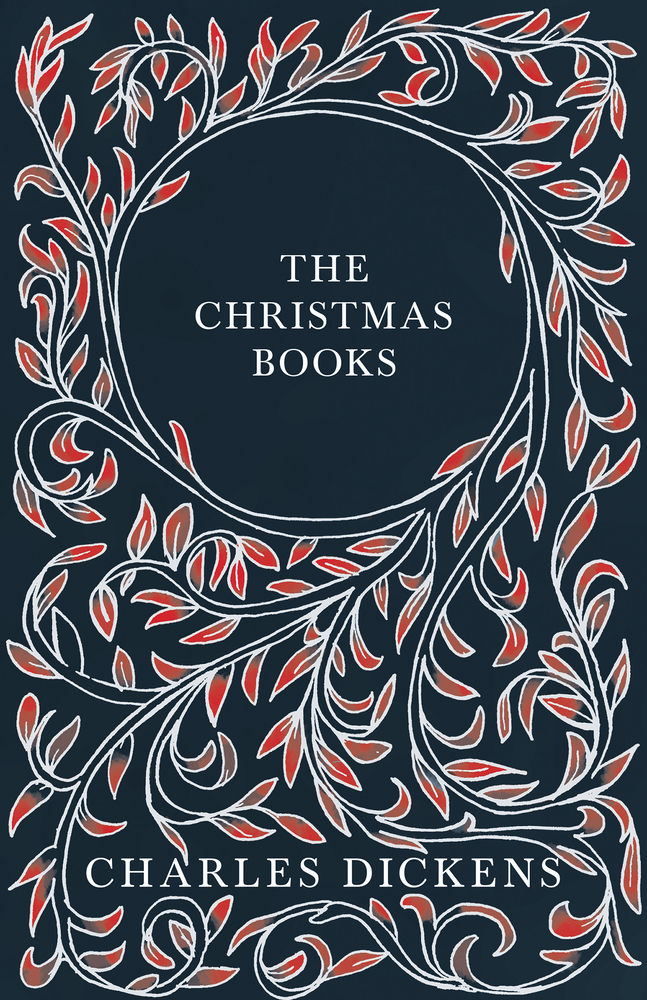
The Haunted Man and the Ghost's Bargain
by Charles Dickens
Dickens wrote several other holiday-themed novellas, including The Haunted Man and the Ghost's Bargain and The Chimes. All five standalone novellas are collected in this single edition.

The Old Nurse's Story
by Elizabeth Gaskell
Though better known for her novels, Gaskell was no stranger to short fiction, especially ghost stories. In addition to The Old Nurse's Story, this collection features a number of less seasonal (but no less spooky!) offerings.

Night and Day
by John Connolly
A collection of short stories and a monograph; the first tales are very reminiscent of M. R. James, though sometimes with a modern twist.

The Haunted Tea Cosy
by Edward Gorey
No one said Christmas ghost stories couldn't also be funny. Check out Gorey's take on Dickens' classic.

The Winter Spirits: Ghostly Tales for Frosty Nights
An anthology containing works by contemporary authors of horror, Gothic, and historical fiction all putting their own spin on Christmas ghost stories.
For more about the history of Christmas ghost stories in the 19th century and beyond, check out Colin Dickey’s 2017 article for Smithsonian Magazine, Elizabeth Yuko's piece for History.com, or this fun collection from The Carterhaugh School of Folklore and the Fantastic.


Comments